|
DESCRIPTION OF THE VOCATIONAL CLINICAL CLERKSHIP AND THE LIST OF PRACTICAL SKILLS TO BE AQUIRED BY STUDENTS Description of the Vocational Clinical Clerkship The Vocational Clinical Clerkship is an integral component of the educational process for students enrolled in the educational program Medicine and Dentistry in accordance with the training of specialists of the second (master’s) level of higher education. Purpose of the Vocational Clinical Clerkship The purpose of the Vocational Clinical Clerkship is to develop and improve practical skills in medicine according to national and international standards, to prepare students for professional medical practice, and to ensure the continuity of the educational process. The Vocational Clinical Clerkship provides students with the opportunity to gain real bedside clinical experience and to gradually progress from mastering basic practical skills to independent clinical work. The key objective of the Vocational Clinical Clerkship is to equip students with practical skills for assessing patients’ conditions, conducting examination, performing basic diagnostic and therapeutic procedures appropriate to their level of professional training. Organization of the Vocational Clinical Clerkship The Vocational Clinical Clerkship is organized according to the standards of higher medical education in Ukraine and European requirements. It is aimed at the consistent development of professional competencies, clinical thinking, responsibility, teamwork, and adherence to ethical and sanitary norms. The Vocational Clinical Clerkship is carried out at the clinical bases of Kyiv Medical University (KMU) — in both inpatient and outpatient departments of healthcare facilities. At the same time, students, in accordance with their individual educational trajectories, have the right to choose their clerkship site, including one located at their place of residence, independently with approval from the dean’s office. Practical Skills and the Objective Structured Practical (Clinical) Examination (OSCE) The certification of students is conducted in the form of the Unified State Qualification Examination (USQE), which consists of two stages:
Integrated Test-Based Exam “Krok 1” and the Professional English Language Exam
Integrated Test-Based Exam “Krok 2” and the Objective Structured Practical (Clinical) Examination (OSCE) The OSCE is a standardized assessment method of clinical practical skills in a station-based format simulating typical clinical situations. The exam is objective, structured, and aligned with international standards of evaluating the professional readiness of medical students. What is OSCE?
The OSCE is objective, structured, and adheres to international practices for evaluating students’ professional readiness. Important: Practical skills marked with an asterisk (*) are included in the OSCE and require special attention from both the student and the instructor. These skills are subject to separate assessment. Importance of the Vocational Clinical Clerkship The Vocational Clinical Clerkship has a key role in the training of future physicians because it:
Vocational Clinical Clerkship Procedure
The clerkship is conducted in municipal, state, and private healthcare institutions, consultative and diagnostic centers, and Primary Healthcare Centers.
Students maintain a logbook in which they keep a record of completed tasks and acquired skills.
Upon completion of the Vocational Clinical Clerkship, it must be approved by the signature of the Vocational Clinical Clerkship supervisor and certified with the stamp of the healthcare institution.
After completing the Vocational Clinical Clerkship, students undergo a credit-based assessment, which includes a report, review of the practice journal, and an interview.
Students must adhere to the standards of medical ethics, infection control, and safety regulations.
Medical uniform (a lab coat or scrubs), changing footwear, neat hairstyle, clean hands; students must also have a notebook, a device with internet access as well as access to their university email address.
Before starting the Vocational Clinical Clerkship, students must undergo a medical examination and obtain a personal medical book of the established format. Most clinical bases require a personal medical book due to the nature of the clinical environment and contact with patients. Expectations from the Students
Vocational Clinical Clerkship Outcome The Vocational Clinical Clerkship forms the foundation for clinical practice, enables students to master the practical aspects of the medical profession, learn to communicate with patients, work in a team, and develop professional responsibility. Active participation and compliance with the requirements are a guarantee of high-quality training for a medical career. General Structure of Practice During the Vocational Clinical Clerkship Logic of Vocational Clinical Clerkship Sequence The Vocational Clinical Clerkship is organized in such a way that at each stage of training, students acquire the necessary set of skills that prepare them for further stages of clinical education: ✅ Introductory Vocational Clinical Clerkship (Year I) – adaptation to hospital settings, observation of the work of doctors and nursing staff, introduction to basic ethics and communication. ✅ Patient Care in an Inpatient Setting (Year II) – patient care, mastering basic procedures such as vital signs measurement, dressing wounds, and patient observation. ✅ Nursing Vocational Clinical Clerkship and Basic Medical Skills in an Inpatient Setting (Year III) – development of competencies in performing basic medical procedures (injections, catheterization, etc.), initial involvement in the diagnostic process. ✅ Physician Vocational Clinical Clerkship in an Inpatient Setting (Year IV) – gaining experience in therapeutic, surgical, obstetrics, and paediatric inpatient departments; performing physical examinations, formulating preliminary diagnoses, assisting physicians with procedures. ✅ Physician Vocational Clinical Clerkship in a Consultative and Diagnostic Center (Year V) – studying diagnostic methods, analysing lab results, independent patient management in outpatient setting under physicians’ supervision. ✅ Physician Vocational Clinical Clerkship in a PHCC (Year VI) – integration of all acquired skills, managing patients in general practice.
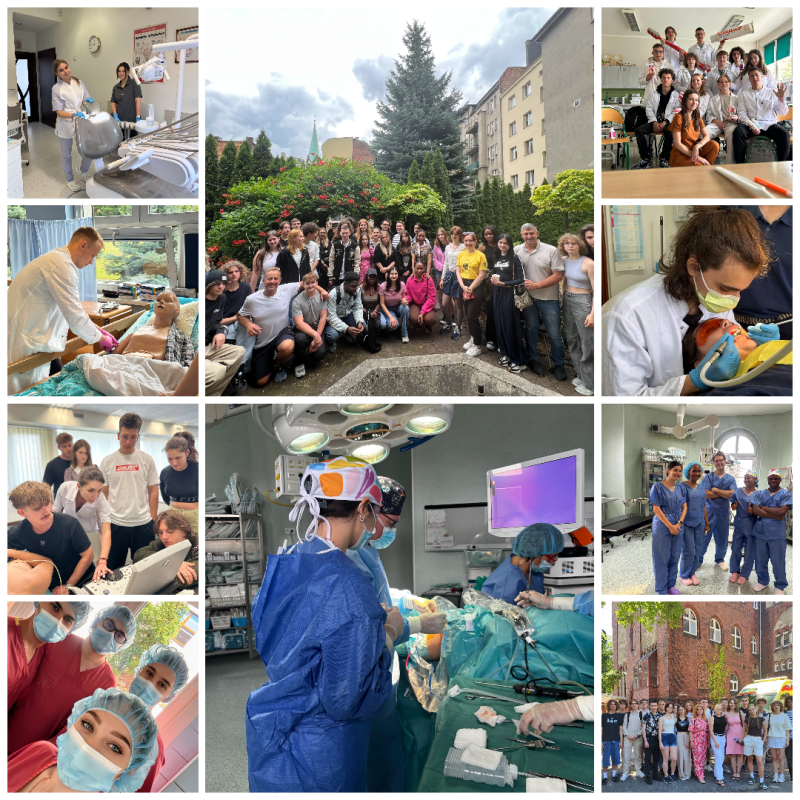
Summer Clinical Practice of Kyiv Medical University in Poland
|
Head of Department
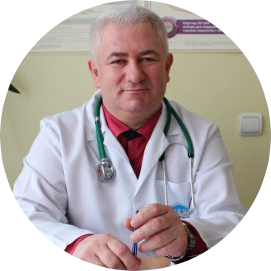 Solonynka Hryhorii Yaroslavovych
Contact information
ESSENTIALS
EVENTS | All Events
|